
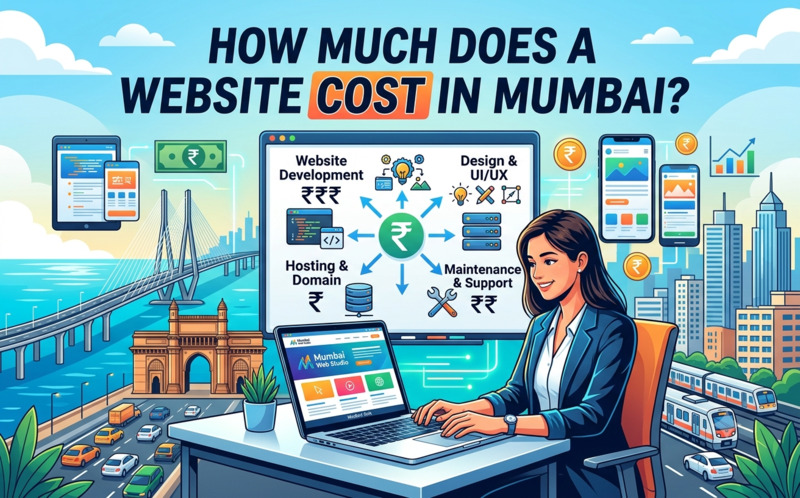
"How much will my website cost?" is usually the first question I get asked, and the honest answer — "it depends" — isn't very satisfying. So instead of dodging it, here's an actual breakdown of what drives the price up or down, and what to watch out for when a quote looks too good to be true.
What actually drives the price
It's rarely just "how many pages." The bigger factors are:
- Custom design vs. a template. A theme customized to your brand is faster and cheaper than a fully custom design built from scratch around your specific content and user flow.
- Functionality. A brochure site with a contact form is a very different job from a booking system, a payment gateway, a multi-vendor marketplace, or anything with user accounts and a database behind it.
- Content and copywriting. If you're providing finished copy and images, development goes faster. If a developer also has to write your content, that's real extra work.
- Revisions and back-and-forth. Two rounds of clean feedback is very different from redesigning the homepage five times. Good developers scope this upfront so neither side gets burned.
- What happens after launch. Ongoing maintenance, security updates, and support aren't free, whether you pay for them explicitly or they're baked into the price.
Rough starting points
Every project is different, but as a general sense of scale in the Mumbai market:
- Simple informational site (5-10 pages, no complex functionality) — the most affordable tier, especially on a well-built template.
- Business website with WordPress (custom design, blog, forms, basic SEO setup) — a step up, reflecting genuine design and configuration work.
- E-commerce store (product catalog, cart, payment gateway, inventory) — meaningfully more, since payment integration and catalog management add real complexity.
- Custom web application (logins, dashboards, your own business logic) — priced individually, since these are effectively custom software, not a "website" in the traditional sense.
Treat these as a sense of scale, not a quote — the only way to get an actual number is to describe your specific project.
Red flags in a very cheap quote
A low number isn't automatically bad, but it's worth asking what's not included:
- No revisions at all, or only one round of "as-is" feedback.
- Zero support after handover — if something breaks in week two, you're on your own.
- An unmodified template with your logo dropped in, billed as "custom design."
- Hosting or domain registered under the developer's account, not yours — meaning you don't actually control your own site.
- No basic SEO setup (page titles, meta descriptions, a sitemap) — something that costs almost nothing to include properly from day one, and is expensive to fix later.
What actually matters more than the sticker price
The cheapest quote and the best value are often two different websites. A slightly higher price that gets you clean, maintainable code, a site you fully own, sensible SEO foundations, and someone who'll actually pick up the phone after launch is usually the better deal — especially once you factor in what it costs to redo a site that was built to be thrown away after the first invoice was paid.
If you want a straight answer for your specific project instead of a rough guide, that's what a quick conversation is for — no obligation, no generic template pricing.